

There’s a version of Clarence Town that appears in property listings, the drive times, the river, the rolling hills. And then there’s the actual town. This is a guide to the actual town
Clarence Town sits in the Williams River Valley, about 32 kilometres northeast of Maitland and 55 kilometres from Newcastle’s CBD. It’s a working township, not a heritage village preserved for tourists, not a commuter suburb dressed in rural clothing. People live here. They’ve lived here for generations. And a growing number are choosing to move here because of what that actually means.
This guide covers what you’ll genuinely find, schools, services, the river, the community, the things that matter to a family deciding whether to make the move.
Getting here. The drive times
This is usually the first question, and it deserves a straight answer.
- Sydney CBD to Clarence Town: approximately 2.5 hours via the Pacific Highway and Hunter Expressway
- Maitland: approximately 35–40 minutes
- Newcastle CBD: approximately 55 minutes
- Port Stephens (Nelson Bay): approximately 45 minutes
- Dungog township: approximately 20 minutes north
- Medowie / Raymond Terrace: approximately 25 minutes
- Tea Gardens/Hawks Nest: approximately 40 minutes
The Clarence Town Road between Raymond Terrace and Dungog was upgraded and resealed in a $20 million infrastructure project completed in late 2025, improving both safety and travel times on the main access corridor.
Clarence Town is also within 20 minutes of Dungog, which sits on the Hunter Valley railway line with regular services to Newcastle and Sydney Central. For buyers who want the option of travelling by train, whether for a weekly city day or a weekend trip, this is a genuinely useful connection that most acreage locations in the region cannot offer.
The township
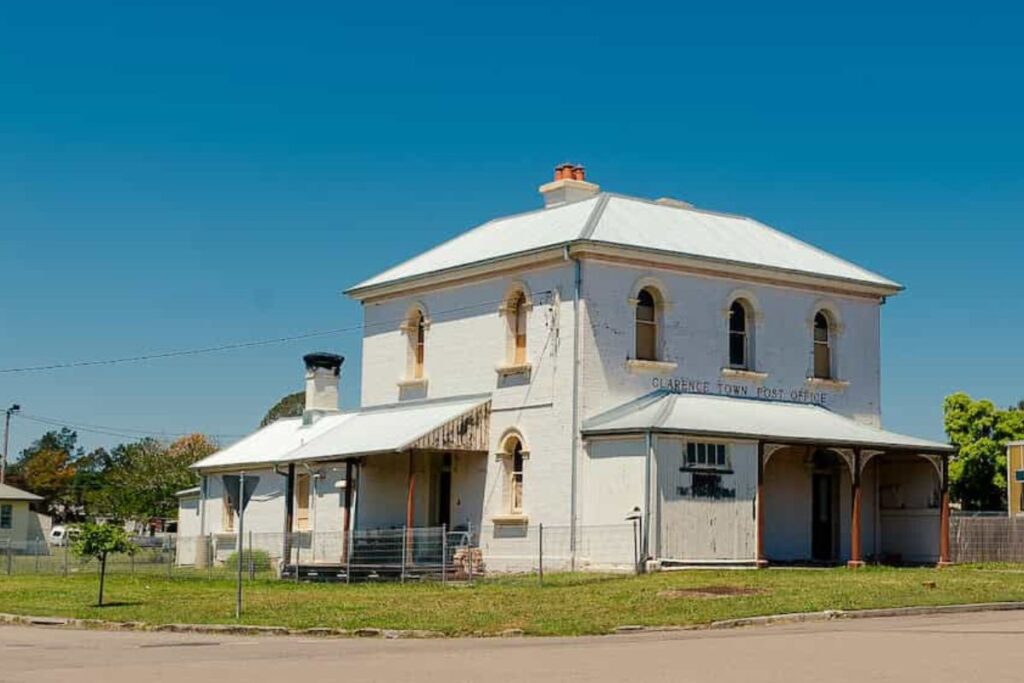
Clarence Town is small. If you’re expecting a Maitland-scale town with a shopping mall and four coffee options, this isn’t that. But small is not the same as inadequate, and for the right family, small is the point.
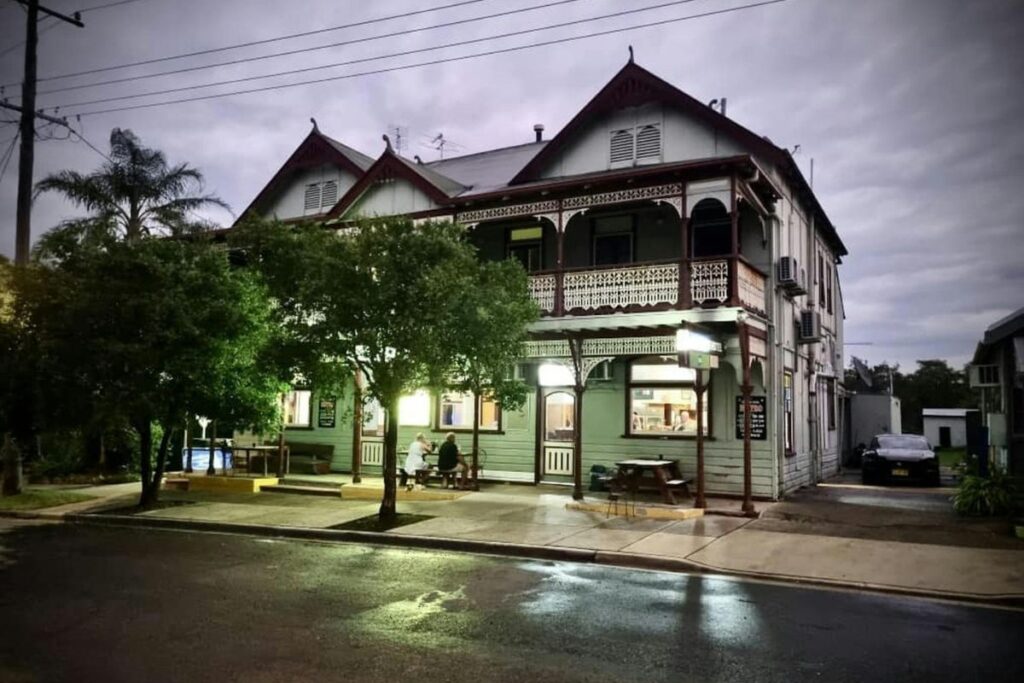
The township has a general store and post office, a pub (the Erringhi Hotel which does a reliable parmi), a primary school, a medical centre, and a community hall that hosts more events than you’d expect.
There are local sporting clubs, football, cricket, tennis. There’s a community that organises itself around these things in the way that Australian country towns have always done, and increasingly don’t.
For anything beyond the basics; gym, large supermarkets, specialists, larger retail, Maitland is 35-40 minutes and has everything you’d need, including a major shopping centre at Greenhills, full medical services, and the new hospital. Newcastle is less than an hour and offers a full capital-city range of services, restaurants, and culture.
Schools
Schooling is one of the first practical questions families ask, and it’s worth being specific.
Primary school
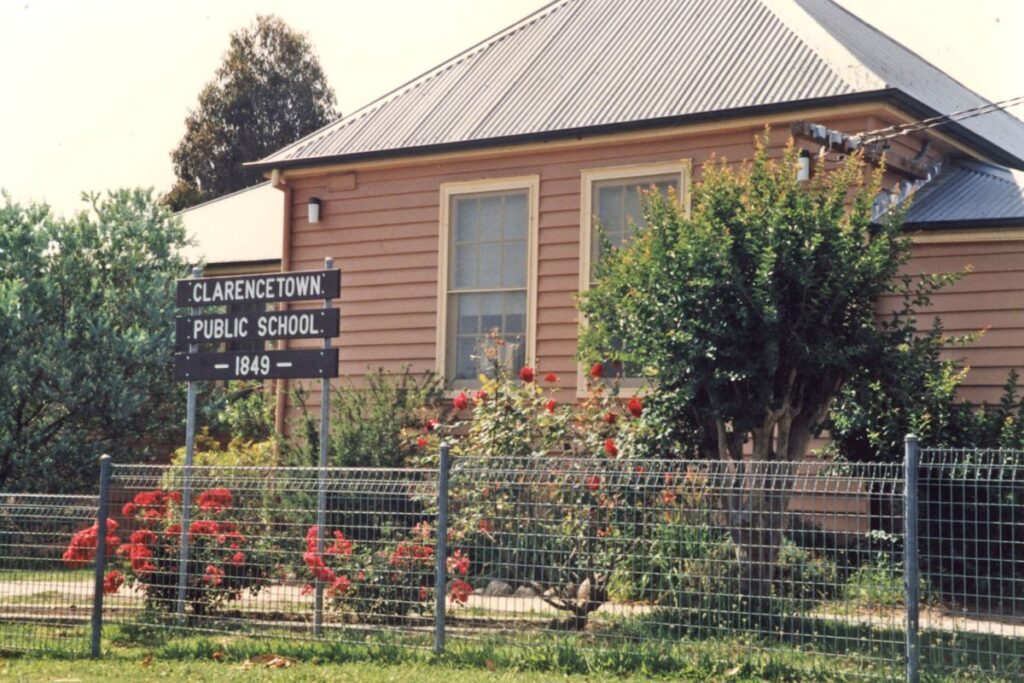
Clarence Town Public School serves the township and surrounding rural properties. It’s a small school by NSW standards, which means your child is not a number. Teachers know students by name, families know each other, and the environment is genuinely community-based. The school has a strong local reputation and benefits from the active involvement of the families who choose to live here.
Secondary school
Dungog High School is the nearest secondary option at approximately 20 minutes north. It’s a well-regarded comprehensive public school serving the Dungog LGA.
Maitland is a 35-40-minute drive and offers significantly more secondary choice, including several respected private and independent schools, for families who need or want that range.
Medowie also has two impressive private schools that go from K-12 and is only 25 mins from Clarence Town.
Childcare and early education
Early childhood services are available in Dungog and Medowie & Maitland. This is worth planning for if you have pre-school-aged children — it’s not a barrier, but it requires factoring the additional drive time into your daily routine.
Healthcare
Clarence Town has its own doctors’ surgery, Clarence Town Healthcare, giving residents access to local GP care without needing to leave the township for routine appointments. They offer a wide range of services including pathology collection.
In addition there is allied health providers in Dungog (20 minutes) and comprehensively in Maitland (35-40 minutes) or Raymond Terrace (25 minutes).
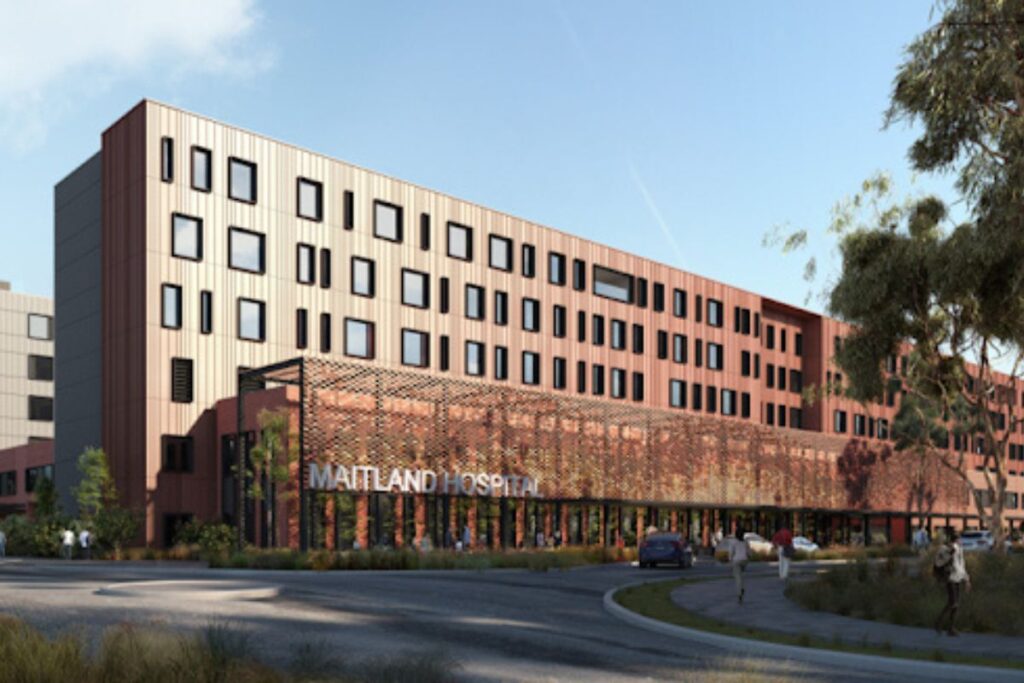
For anything significant, the new Maitland Hospital is one of the most important facts about this region. The $470 million facility represents one of the largest single investments in regional healthcare in NSW history. It is fully equipped with emergency, maternity, surgical, and specialist services.
John Hunter Hospital in Newcastle, a major tertiary facility, is under an hour.
The Williams River
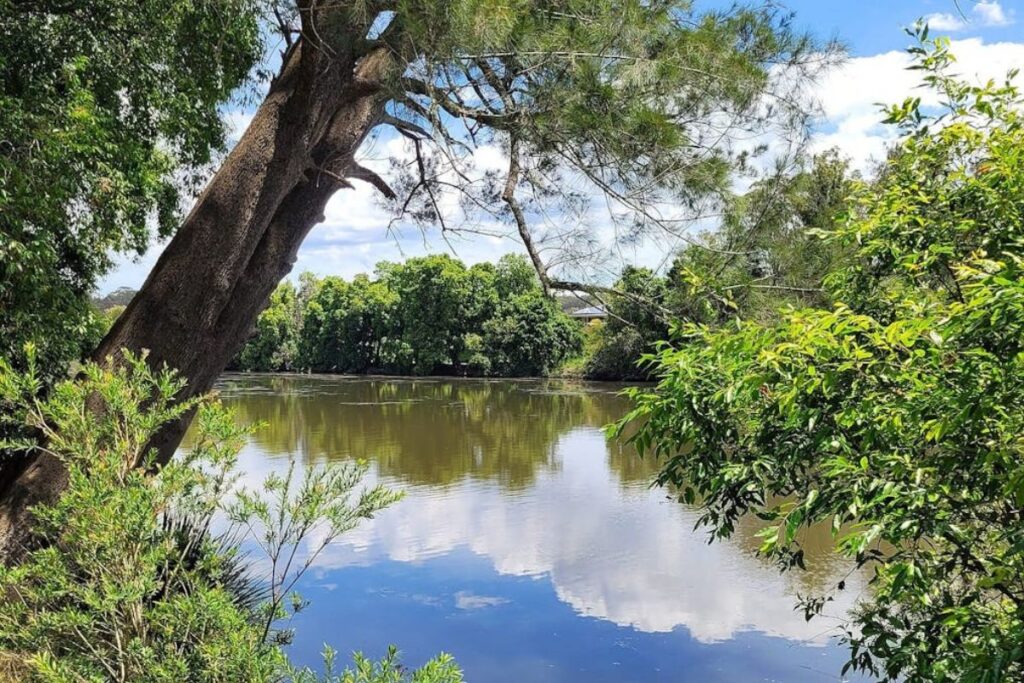
No honest guide to Clarence Town skips the river. The Williams River runs through and around the township, and it is, genuinely, one of the best things about living here.
In summer, it’s a swimming institution. There are several well-known access points where families gather on hot weekends. Clear, cool water, overhanging trees, the kind of afternoon that doesn’t need a destination or a plan. In the cooler months it’s a fishing spot, a walking route, and the kind of ambient beauty that makes the morning commute (to the kitchen) feel unreasonably pleasant.
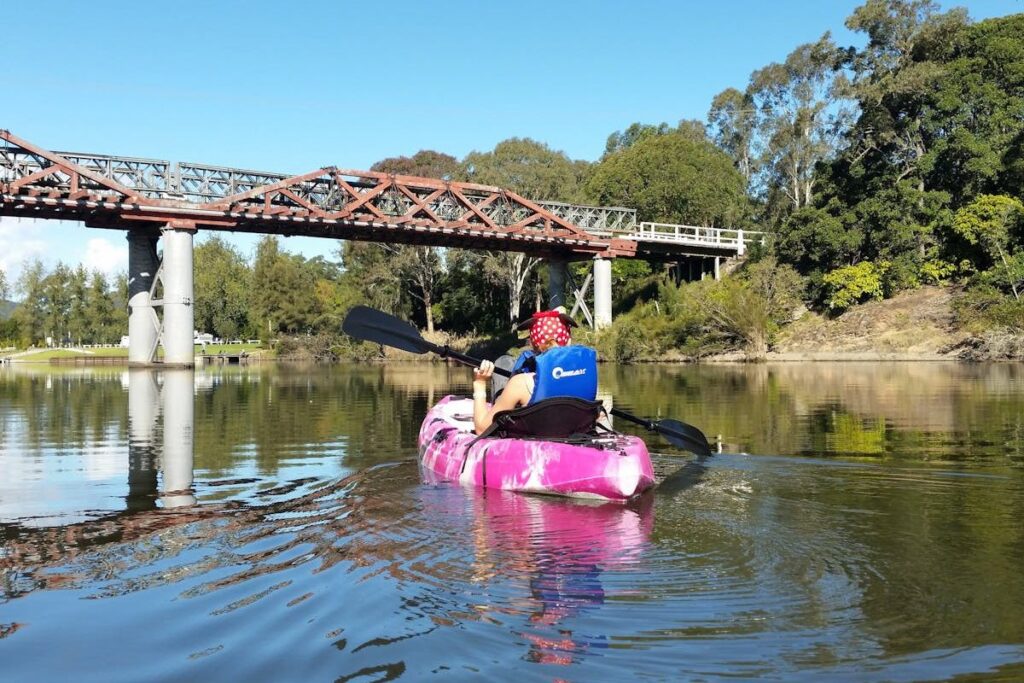
The river is not a feature or an amenity. It’s part of daily life in a way that suburban parks and recreation facilities rarely manage to be.
The kids knew the best swimming hole before they knew the town’s name. That tells you something.
Community life

This section is harder to quantify than drive times and school rankings, but it may be the most important.
Clarence Town has active community sport. Football, cricket, tennis, and junior sport programmes that depend on parental involvement in the way that only small communities can sustain.
The school fete, the local show, the country race meet at nearby venues, these are events that people actually attend, because they know the people running them.
New arrivals consistently report the same thing: they knew their neighbours within a month. Their children had friends before the school term ended. They were welcomed into community life in a way they hadn’t experienced since childhood.
This is not nostalgia. It is a genuine and functional feature of small-town living that no suburb, however well-designed, can replicate by infrastructure alone.
Internet and connectivity

For the hybrid worker and remote professional, and this is a significant portion of the buyers now looking at Clarence Town, connectivity is not a nice-to-have, it’s a condition of the move.
NBN is available in Clarence Town and at Mill Rise Estate specifically. Underground power is installed at the estate, meaning reliable electricity infrastructure. This is not universally true of acreage developments in the region, it is a deliberate feature of Mill Rise and worth noting when comparing options. Every lot will have access to the NBN and electricity, account and installation is organised by the purchaser.
Satellite internet provides a strong backup option for any rural NSW property, with download speeds and latency that now support video calls, cloud work, and streaming reliably. For most remote workers, connectivity at Clarence Town is no longer a concern.
Combined with NBN connectivity at the estate, the Dungog rail link means hybrid workers have genuine flexibility in how they get to the city on office days.
What it’s really like to live in Clarence Town

Honest answer: it’s quiet. Genuinely, sustainably quiet. Not the quiet of a suburb at 11pm, but the quiet of a place where the loudest regular sound is birdsong or the river.
It’s also connected, to Maitland, Newcastle, Port Stephens, and the Hunter Valley region, in a way that makes the quiet feel like a choice rather than an isolation. You are not cut off. You are just far enough away.
Local families enjoy the closeness to Nelson Bay and Port Stephens less than an hour away has beaches, whale tours, shopping and great restaurants.
One local mum of two under 5, who moved and built just outside of Clarence Town also enjoys being only 40 mins from twin towns Tea Gardens and Hawks Nest. “I love going to Nelson Bay but Tea Gardens is an easy 40 mins after preschool and we love heading to Jimmy’s Beach for a few hours and most afternoons we see the dolphins. We grab fish and chips and are home before dark.”

For families who want space, who want their children to grow up outdoors, who want to know their neighbours and mean it when they say it, Clarence Town is not a compromise on lifestyle. For many people who move here, it’s the first time they’ve had the opportunity to experience it.

Mill Rise Estate, land available in Clarence Town from $600,000
Mill Rise Estate at 231 Glen William Road offers 29 acreage lots from 2 to 5 acres with wide frontages, access to underground power and NBN, with generous building envelopes.
Registration expected early August 2026. Stage 1 nearly sold, Stage 2 selling now.
Contact Tavis Chivers (Dillon & Sons, 0428 921 704) or Scott Hunter (Ray White Rural Lifestyle Sydney, 0448 870 068).